Thursday, August 8, 2013

Challenges at MTCEA

Happy are those whose strength is in you, Lord, in whose heart are the highways to Zion. As they go through the valley of Baca they make it a place of springs; they go from strength to strength. Psa. 84:5-7

The past several months have certainly felt like a valley in many ways, as we have been involved in leadership at Mennonite Theological College of Eastern Africa (MTCEA). But in our utter dependency on His strength and wisdom, we have been forced to seek His face constantly, and hence, have also felt the refreshing springs of His spirit!

We have completed the last term of the school year and had graduation on July 26. Joe has diligently tried to pay down as many outstanding debts as possible, and get the management of the college back on track. He made a special effort to see that the teachers were paid on time and were paid back salaries that they were owed. We are thankful that through careful management there has been a 40% reduction in the debt, however, there is unfortunately a long way to go to reach financial stability. Our management partners have been very affirming and supportive in making difficult decisions.

MTCEA Review Team meeting at
 Mennonite Guest House, Nairobi, Kenya
A review team looking at the college program has also met several times and is presently preparing their assessment and recommendations for strategic planning for the future. However, there are still major hurdles that need to be crossed. One of the biggest challenges will be to find a plan to make the college financially viable. EMM has been providing the majority of the budget (60% or more) for the past number of years. But EMM has changed the funding policy to align priorities with their mission emphasis and vision rather than ongoing management of programs, so financial assistance will terminate at the end of this year. This will require much more reliance on the local churches themselves for finances or searching for other sources of funds. We’d like to see the churches take more ownership in the college, providing financial assistance and also finding capable people to administer the college. We believe that there is the capacity in the churches to do this - $1 per year per member will provide the entire annual budget. But it is a new idea to the churches here and this kind of cooperation is complicated by internal issues. We think this it not time for a bailout, as difficult as it may be. It is time to face the consequences of over-dependence on outside funding, and for the western church to look for healthier ways to partner with the African churches, which we see as an opportunity, not an obstacle.

At present we are not sure of the way forward for the college but there are ongoing conversations. However, we are committed to assist in leadership training and hope in the near future to return to the diocese based training which we feel will meet a specific need for lay leaders who cannot attend Bible college. They are eagerly waiting for their training to begin and we are starting to look at our schedule and make plans. Thank you for your continued prayers and interest in the church in Tanzania and Kenya.

Saturday, June 22, 2013

Detours and Speed Bumps

Traveling around here we have encountered a fair number of both detours and speed bumps. The detours are usually because of road construction, so we accept them without complaining, but they do slow us down. Speed bumps seem to be the only way to slow everyone down. Sometimes they say, "speed bumps cannot be bribed."
Our experience here has been a little like that - there have been detours, taking us places we did not expect or plan, and there have been speed bumps that slow down our planning. We recently noted that after being here for over 8 months, we have done a total of 3 training seminars. We thought we would be more than half way finished with the 18 Mennonite dioceses by now. First was the delay with our residence permits, so our seminars were put on hold. But we have heard from those 3 church districts that they have been having training seminars and are ready for the next round of training and materials.
We are happy to say that we have received our residence permits in Tanzania, but just as we received them, we were given a new assignment at Mennonite Theological College and our seminar schedule was put on hold. We have also applied for residence permits in Kenya and have received word that they are nearing completion.
I wrote about the assignment at Mennonite Theological College of Eastern Africa (MTCEA) in an earlier post. I am trying to be patient and a good learner for whatever God is trying to teach me. But to be honest, I feel like I am treading water, can't seem to get my feet on the bottom. I won't go into all the problems here, but just to say that weak leadership over the past few years has allowed an operating style to develop that led to lax enforcement of policies, a significant financial debt, and lower quality of education. Several students are behind on their tuition payments, but allowed to continue their study. Money was spent without following a budget so some obligations remained unpaid.
Some students and staff think my presence will bring some kind of miracle and lift MTCEA out of its problems, others feel threatened by my presence (and some should feel threatened!). So I struggle each day to maintain my own integrity and be clear about policies and procedures.
Because of the problems at MTCEA, a Review Team was appointed by the Board of Governors to explore possibilities and recommend changes. I am looking forward to meeting with them June 25-26 and discussing possibilities. There are 5 persons on the Review Team including me (Joe), two are from Tanzania Mennonite Church, one from Kenya Mennonite Church, and one from a seminary in Nairobi who will bring professional expertise. All of these are mature and experienced in education or administration and I think we have a good team. But I will need to write about the Review Team after we have met. After we meet, next week, we will travel to Nairobi for a meeting of the missionary team and some R&R. Part of that time will also probably be to write up the results of the Review Team meeting.
Again, we thank you for your support in so many ways, including your prayers. We are feeling there is a definite spiritual dimension to the problems we are encountering. There have been some church leadership situations in the past that adversely affected this local community, including the college. One of our prayers has been that underlying negative factors would become known, and we are beginning to see some of the attitudes. We are making it a priority to work with local leaders in that. So your prayers are needed and appreciated.

Wednesday, May 22, 2013

Africa Update

We just returned from traveling, first to Kenya for a missionary retreat near Malindi, Kenya, that focused on maintaining "spiritual rhythms" in our lives. Then we drove to DSM for a couple things: a medical checkup for Gloria (her pacemaker is doing fine) and to consult with 2 men assigned to the interim "coordinating team" for the Bible college here. We left Dar on Wednesday and arrived safely back homee Friday afternoon, grateful for God's protection as we drove about 3,100 kms.

Because of the additional responsibilities with MTCEA, we feel we need to lay down our diocese-based training programs for the time being, until a new principal is appointed. We just can't do both. We hope to return to that in a few months.

Update on Mennonite Theological College of Eastern Africa:
  • The board of the college met early April and acted to remove the principal. An interim coordinating team was appointed, of which Joe is chair.
  • Students will return to the college to begin classes June 3 for a shortened 8 week term. 
  • A review team will begin meeting early June to assess needs, make recommendations and initiate a search for the new principal. The team includes representatives from KMT, KMC, EMM East Africa, and a consultant from one of the seminaries in Nairobi.
  • The college board is scheduled to meet again June 14 to hear first reports on the review process.
Thanksgiving:
  • Praise God we both have received our residence/work permits! Joe got his several weeks ago and Gloria got hers this week while in Dar.
  • Praise God that our physical and emotional health is good. We are aware that there are spiritual dimensions to our ministry and spiritual opposition to what God wants to do here, and we feel supported by prayer.
  • Praise God for safety in our recent travels through Kenya to Malindi, then on to Tanga, Dar, Morogoro, Shinyanga, and back home.
  • Praise God that there is a spirit of cooperation among church leaders for changes that need to be made at the college.
Prayer Concerns:
  • Pray for Joe and the interim coordinating team as they work through management issues and policies, including personnel policies and the financial debt that has deepened over the past several years.
  • Pray for the next meeting of the Bible college board June 14.
  • Pray for increased commitment by the churches to support the college financially.
  • Pray that students will be able to find the financial assistance they need and come with willing spirits to learn and cooperate with the changes that have been made.
  • Pray for the staff as they prepare their courses, teach, and demonstrate Christian character.
  • Pray for us as we harness ourselves in the yoke of this work with Jesus at our side! 
  • This week Joe is presenting a set of seminars on leadership to the newly appointed leaders of the local church. Pray that the information shared will be helpful to the leaders that attend.
Thank you all for your faithfulness and prayers.

Joe and Gloria Bontrager

Saturday, April 13, 2013

Mennonite Theological College of Eastern Africa

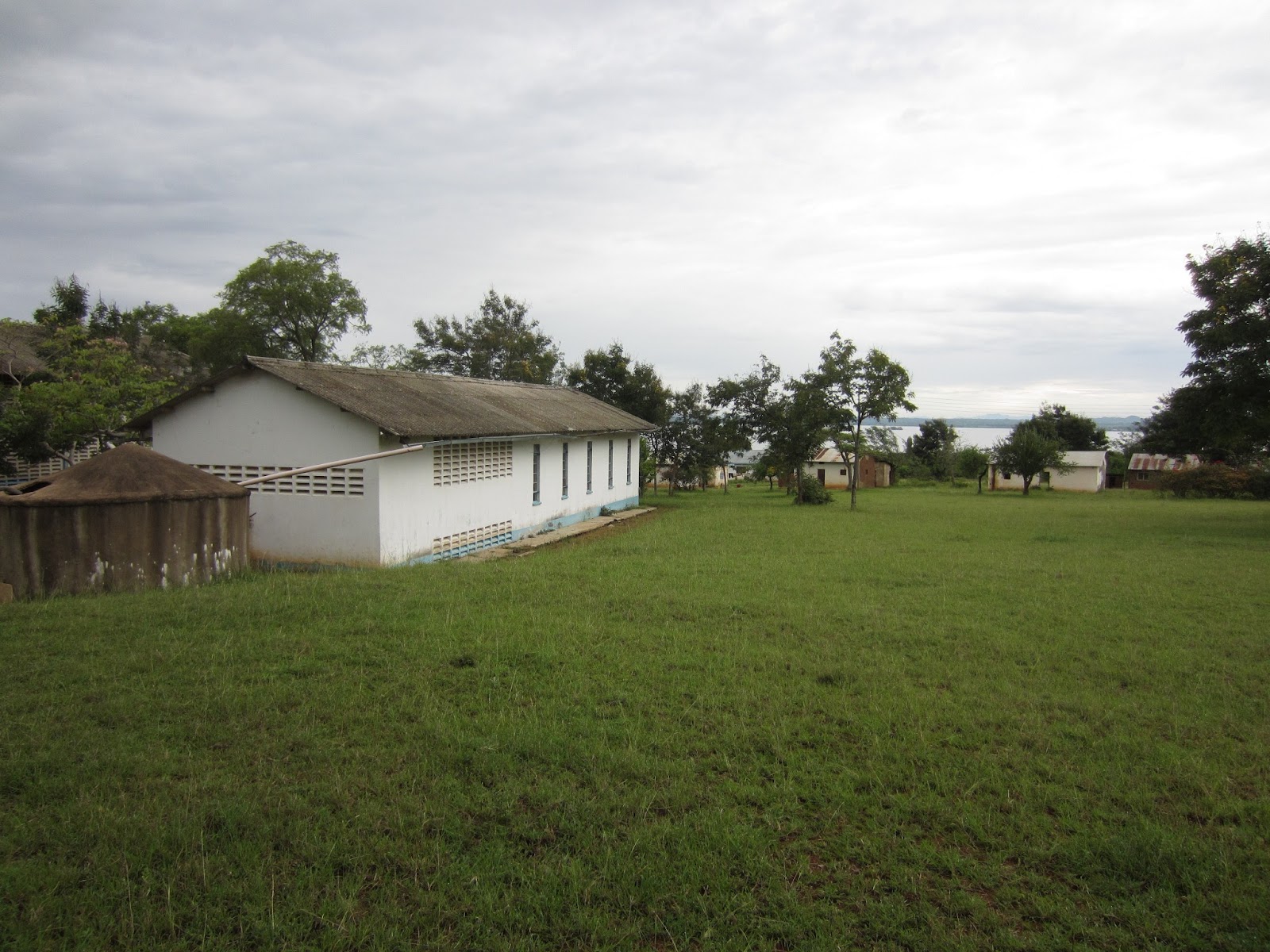
Mennonite Theological College
office/classrooms (left), chapel (right)
Mennonite Theological College as it is now began in the early 1960's when the original Mennonite Bible school was upgraded to theological college and new buildings were built. The same buildings are still in use, but the program has gone through several changes, including a 10 year period during the 1980's when the school was closed. The college reopened in the early 1990's with a new academic program and leadership. The buildings are basic, but serve the college well. The present enrollment is 25, with space for about 50.

Last week, April 5-6, the board of Mennonite Theological College in Eastern Africa met to address issues facing the college. The college is deep in debt, nearly half is unpaid salaries, and the administrative style  and actions generally have been unsatisfactory. So the board took action to remove both the principal and vice principal from office and to engage a search process for a new principal. I was asked to lead an interim coordinating team that includes 2 other persons.


Another view of the office/classroom building
The board also approved a proposal for an external review of the college with proposals for new priorities and programs for the future that better meet the needs of the churches.

I feel in some ways energized by the possibilities this brings, but it is a major change for us over the next 3-4 months until a new principal is appointed. It will mean that we will at least cut back on our training seminars in the churches, if not lay it down altogether for this period of time. Immediate challenges include improving financial stability and rebuilding relationships with the churches. Fortunately, we are living near the college, so this does not require us to move to a different area. But our heart is still in the diocese-based training program and we look forward to getting back to doing that.

Former dormitory, now library.
Lake Victoria's Mara Bay in the background.
An interim is an opportunity to clarify vision, to reestablish connections, and to change the program to better fit present needs. Our goal for the next several months is to begin working toward that.

Pray for the search for a new principal, and pray also for us as we deal with challenges at the college.

Monday, March 25, 2013

Victoria Diocese, Kenya Mennonite Church


The local gas station in Magunga
Wednesday, March 13, we left Nyabange and drove to the town of Magunga, a small town in western Kenya, around 50 kilometers west of the town of Homa Bay. This is Victoria Diocese of Kenya Mennonite Church, with around 10-12 churches. It is a scenic, hilly area, and in the background are the Gwassi Hills, which separate Magunga from Lake Victoria to the west. It is a more isolated area than most, with no paved roads, no running water, and electric and even cell phone service was not reliable.

Joe, Bishop Elisha Osewe, Pastor Charles Kimwamu
in front of Kigoto Mennonite Church
Pulpit built 40 years ago by missionary Clyde Shenk
We came to conduct the “training of trainers” for pastors who will train others to prepare them for church leadership. The training was scheduled for Thursday, Friday, and Saturday, so we planned to arrive Wednesday. When we arrived, we discovered that, in spite of our efforts to clarify, they were planning for Thursday to be the arrival day, with the actual training beginning Friday morning. But they were very gracious, and agreed to begin on Thursday with those who could attend. In all, about 25 attended the training. Some came out of curiosity, or simply the desire for Bible teaching. Others have committed to conduct training groups in their home areas.

The main church here is Kigoto Mennonite Church. The building was built by missionary Clyde Shenk in the early 1970’s, using corrugated iron sheets for both roof and walls. The Mennonite families who began the church had moved here from Tanzania in the 1960’s and 1970’s. They were originally from Kenya, but moved to Tanzania for land. When Tanzania gained independence and moved toward socialism, some of them moved back to Kenya, but found their family lands were not available, so they settled in areas where land was still available. In time, they began holding church services.

This is different from Tanzania, where Mennonite churches spread to other areas of the country as people moved to the cities for education and jobs. In Kenya, the spread was to other rural areas in search of land, less to the cities (with the exception of Nairobi).
Seminar participants in worship
In Victoria Diocese, we faced more of a language barrier than anyplace we have been so far, due to two factors. One is that Luo is the main language. Many can function in Swahili, and some in English, but Luo is the “heart language” and other languages present difficulty. The second factor is that those without higher education (beyond primary school) are primarily oral in their communication. They can read and write, but it is not a natural way to communicate. The written word just does not have the same impact as the spoken word, and it seemed to affect how well they understood the Bible. Several do not even own a Bible, because they are not available locally. To us, it raised the question of how to best present the training so it is understood. That is an issue we will continue to look at.
Ezron Ojambi, 84, one of the early members, walked daily
about 6 miles each way to attend the seminar.

Now we are back in Nyabange, Tanzania, where we expect to spend the next few weeks, working on additional study materials.

Just this update: we have been told that our residence permit applications have been submitted to the Tanzania immigration. Thanks for praying about it. We hope to hear soon whether the applications have been accepted, and then they need to be processed. In the meantime, we continue to be "tourists" in Tanzania. 

Saturday, February 16, 2013

Making Lemonade


Our granddaughters, Zoe and Mykah Bontrager-Thomas,
with their lemonade stand in their own living room,
because outside is winter.

We are not really making literal lemonade, although it would taste good to have a glass. I am thinking about the saying, “When life gives you lemons, make lemonade.” Just for fun, I added a picture of our granddaughters and their lemonade stand. 
We were invited to attend the bishops’ missions workshops the last few days of January (see the previous blog post). The main purpose for the workshop was to build vision and ownership among the bishops for missions outreach, and then they will share the material with their pastors. We were asked to put the proceedings and presentations together in a format that the bishops can use it as a manual to present to their leaders.
Now for the lemons. During the workshop, we were told that our residence permits for Tanzania had not yet been applied for (we have been here 4 months already) because some documentation was still needed, and that we should not begin leading seminars in Tanzania while we are in the country on a tourist visa. We won’t go into detail about the missing documents, just to say that we had submitted them but they apparently got misplaced.
We had scheduled 2 training seminars for the 2 weeks following, so suddenly we had 2 weeks unscheduled, available for whatever. As it turned out, we decided to go to Nairobi, where we needed to check in with a couple people anyway and we would have a quiet place to work on the missions manual.  So that is what we did. By Wednesday of the second week, we had finished the manual and took it to a local copy center to make bound copies for the bishops. It includes the presentations, and we wrote and added a study guide to help with presenting the materials to others.  So the manual was the “lemonade” that came from the “lemons” of our permits being delayed.
Workshop participants gather for prayer.
The presentations included biblical foundations for missions, Anabaptist perspectives on missions, the role of African churches in missions, and practical pointers on engaging in cross-cultural missions. Our prayer is that the workshop and the manual will energize the churches to follow Jesus’ command to “preach the gospel to all peoples.”
Another bit of "lemon" came after we printed the manual. I took the finished product on a flash drive for them to copy. When I got back, I discovered a virus had gotten into the flash drive and corrupted all the files. Apparently, the virus came from the copy center. But at least, I had the hard copy. However, I did a Google search and found a way to recover the lost files, and it worked. So grateful!

Saturday, February 2, 2013

IMMEA Workshop 2013


Richard Showalter presenting to the workshop
IMMEA stands for "International Mennonite Missions of Eastern Africa," an African Mennonite mission agency formed about a year and a half ago by Mennonite bishops from Kenya and Tanzania Mennonite churches in a joint meeting. The purpose is to build awareness and carry out cross-cultural missions on behalf of the African Mennonite churches.
Bishops in discussion: Dominic Opondo, Stephen Mang'ana,
Moses Otieno, John Nyagwegwe
We just returned from attending a 3-day workshop on missions for the bishops. We met in Mwanza, the second largest city  in Tanzania, located on the southern end of Lake Victoria. Eight bishops attended the workshop with presenters Reuben Ezemadu, a Nigerian church leader and mission administrator, and Richard Showalter, American mission administrator and international missions consultant. Other attendees were Aram DiGennaro, EMM's regional representative in Eastern Africa, and we, Joe & Gloria Bontrager as theological education consultants. We were invited to attend as "observers," but after arriving we learned that means more than just being there and watching. We were asked to lead reflection sessions and to develop the workshop material into a "handbook" for the bishops to use in sharing the material to their local pastors.
Bishops Philip Okeyo and Christopher Ndege 
Aram DiGennaro and Bishop Hellon Ogwada  
Even the chairs felt the "weight" of the issues!
It was stimulating to reflect on the information given, and then to sense the enthusiasm of the bishops for reaching out to places "least-reached" with the gospel, defined as those where less than 2% are evangelical Christians. This includes areas within their reach throughout Kenya and Tanzania. According to the information provided, there are 36 "least-reached" groups in Kenya totaling nearly 4 million people. In Tanzania, there are 39 "least-reached" groups, totaling nearly 56 million people. Besides these, we heard reports of nearby villages that have no Christian witness and where many of the people have not heard the biblical story, but are open and seem ready to commit themselves to follow Jesus when they hear the gospel message. It seems God has prepared them and opened their hearts.
Participants gather in a circle for prayer at the end of the workshop.
From left: Bishop Moses Otieno, Pastor Eli Wang'ombe, Bishop John Nyagwegwe,
Bishop Philip Okeyo, Bishop Dominic Opondo, Presenter Reuben Ezemadu
The bishops expressed eagerness to return to their regions and present the vision to their pastors and congregations. One of their highest priorities is prayer as they discern the best way to move forward. They have limited financial resources, but willing people and open opportunities, and they are seeking the leading of the Holy Spirit in finding the best way to move forward.